
Is a Rain Garden an Option For You?
By Kim Lahman
WHAT IS A RAIN GARDEN?
A rain garden is an eco-friendly landscape design that collects stormwater runoff from surfaces such as roofs, driveways, and yardsIt allows the runoff to soak into the ground rather than going into overwhelmed pipes or flooding yards, driveways, or streets. A rain garden has a bowl-like shape and averages six inches deep. It is filled with a variety of vegetation, including small shrubs, native grasses, and flowering plants with deep, strong root systems.
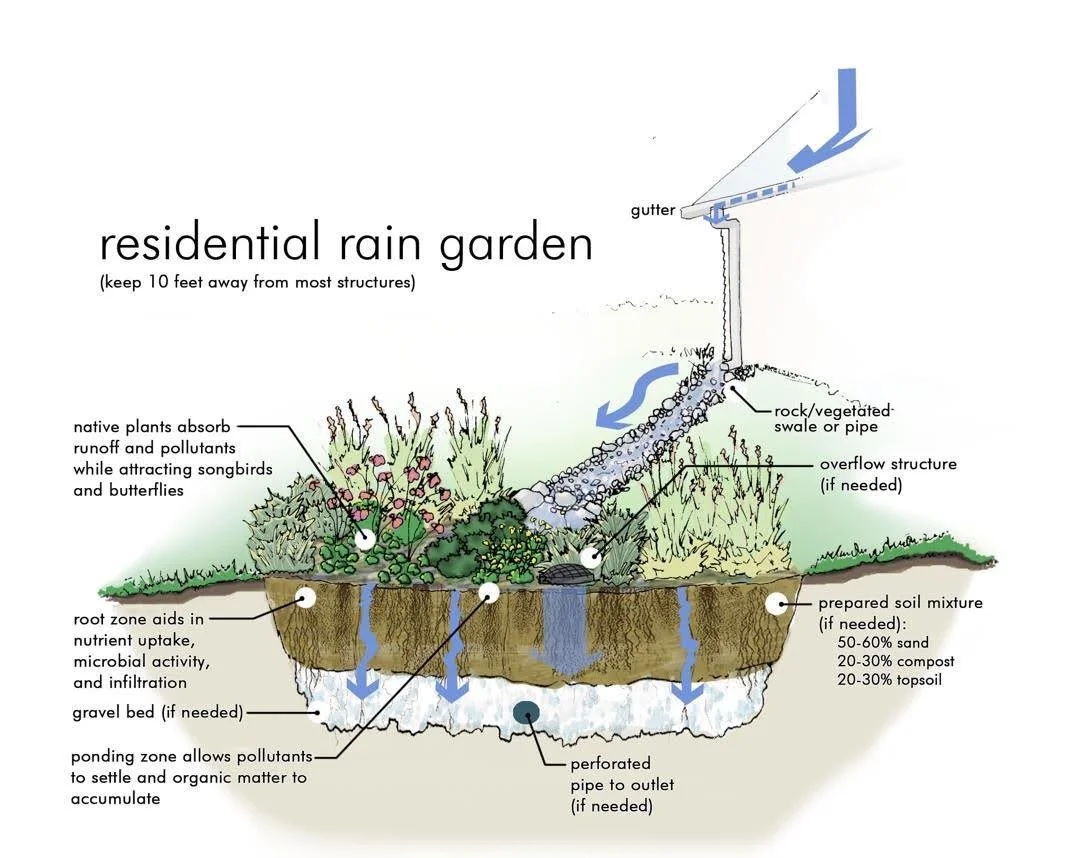
Diagram by Berkshire Environmental Action Team, “Rain Gardens,” https://www.thebeatnews.org/BeatTeam/rain-gardens/.
HOW TO CHOOSE THE RIGHT LOCATION AND SIZE
First, a rain garden should be installed at least ten feet from your home to prevent possible leaking into your foundation. It should not be placed over a septic system or near black walnut trees. The rain garden could potentially interfere with the functioning of the septic system, and black walnut tree roots give off a chemical called ‘juglone,’ which negatively affects some plants.
A rain garden needs full sun (six hours) or partial sunlight (three to six hours). Planting underneath trees is not recommended. Install the garden on a flatter part of the yard to make digging easier. Be aware of underground utilities; call your local public service department to schedule an inspection of your chosen location before digging. After the location has been approved, dig a test hole one foot deep and fill it with water. Monitor the water in the hole. The hole should empty within two to three days to be considered suitable soil for a rain garden.
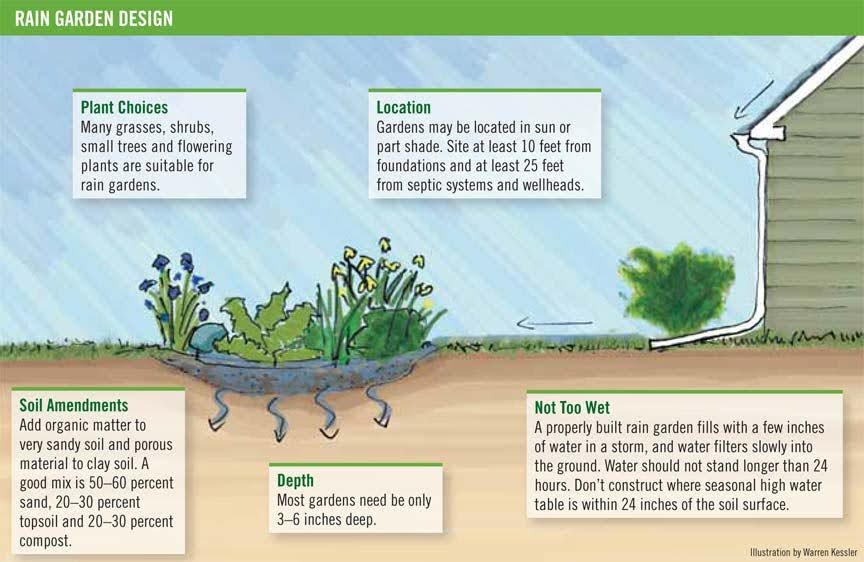
Illustration by Warren Kessler, Town of Carrboro Rain Garden Design, https://townofcarrboro.org/2555/Rain-Gardens.
The size of the rain garden is determined by the size of the roof and/or lawn draining into the garden. Measure the length and width of these surfaces and multiply together to get the surface area in square feet. The size of the rain garden should be at least 10 percent of these surfaces where stormwater is unable to penetrate. If there is not enough space available, multiple gardens can be installed. The depth of the garden and the type of soil are also factors in determining the garden’s size.
PREPARE THE SITE
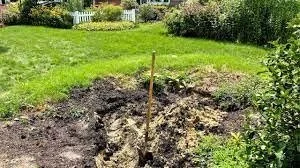
Photograph by Princeton Hydro, “How to Build a Rain Garden in 10 Steps,” September 28, 2021, https://princetonhydro.com/how-to-build-a-rain-garden-in-10-steps/.
The site will need to be prepared before adding the plants. The soil will need to be dug up and loosened to a depth of two feet. If the soil is clay, replace the two feet of soil with a mixture of compost, topsoil, and sand (approximately 50-60 percent sand, 20-30 percent topsoil, and 20-30 percent compost).
This allows the rain to sufficiently soak in and also gives the plants a great start. The extra soil can be used to make a raised berm or earthen dam along the sides of the garden. The berm’s role is to keep the water in the garden. Most rain gardens have berms about three to six inches tall. The next step is constructing a weir, an area of the berm that allows water to gently pass over when there is excessive rain. Weirs can be covered with rocks, grass, or wood. Typically for a yard rain garden, weirs are designed to be two feet wide and are lower than the berm to allow for overflow.
SELECT THE RIGHT PLANTS
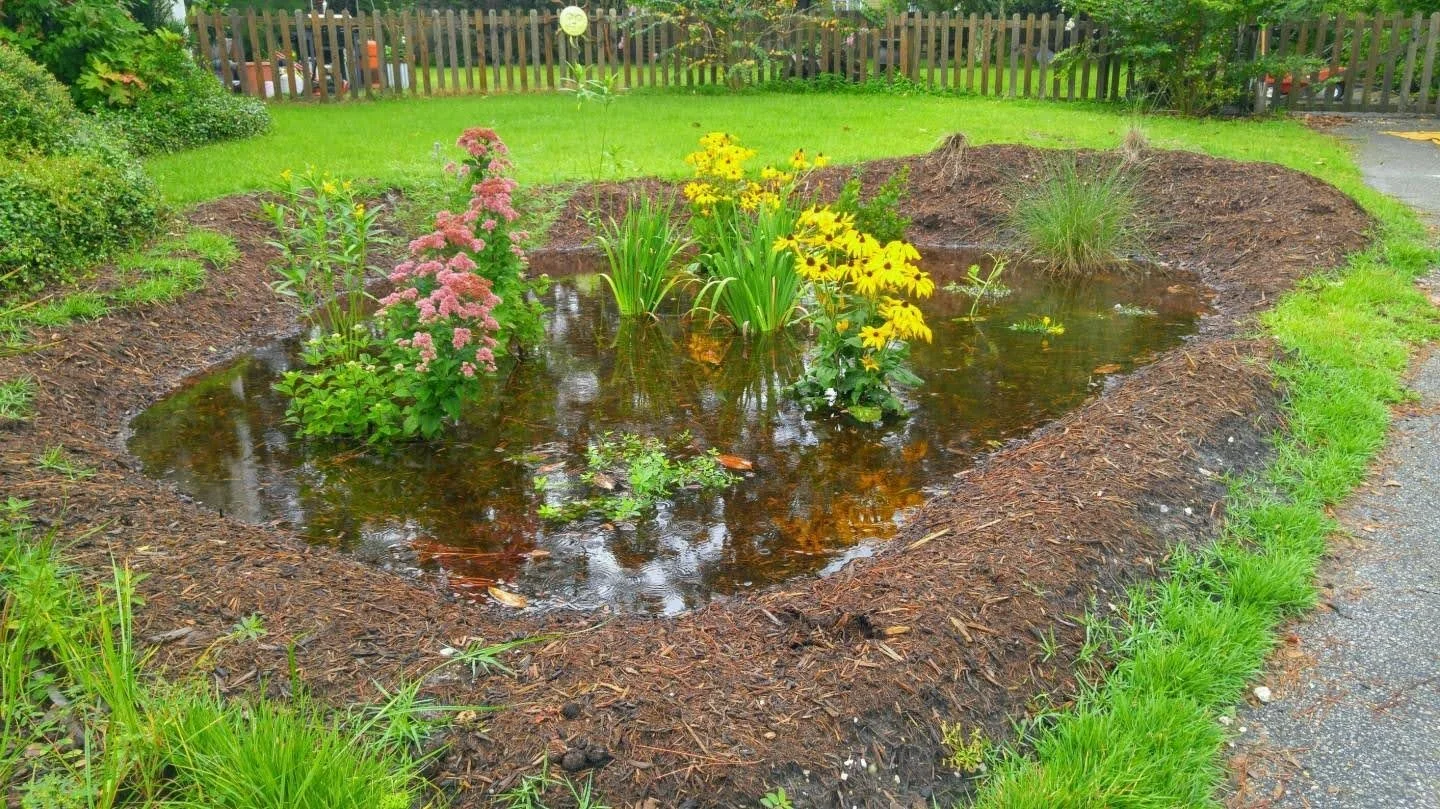
Image from Surfrider Foundation, “Cape Fear Chapter Installs York Residential Rain Garden in North Carolina,” November 30, 2018, https://www.surfrider.org/news/cape-fear-chapter-installs-york-residential-rain-garden-in-north-carolina.
Volunteers in New Hanover County met at the home of Bob and Dawn York to learn about soil testing, measuring a roof area for rain diversion, the benefits of using native plants, and best practices for rain garden installation.
Native plants, ones that grow naturally in the region where you live, are recommended for local rain gardens. The National Wildlife Federation website has a native plant finder where you can find native plants that are uniquely adapted to local weather, soils, and ecosystems in your community, https://nativeplantfinder.nwf.org/.
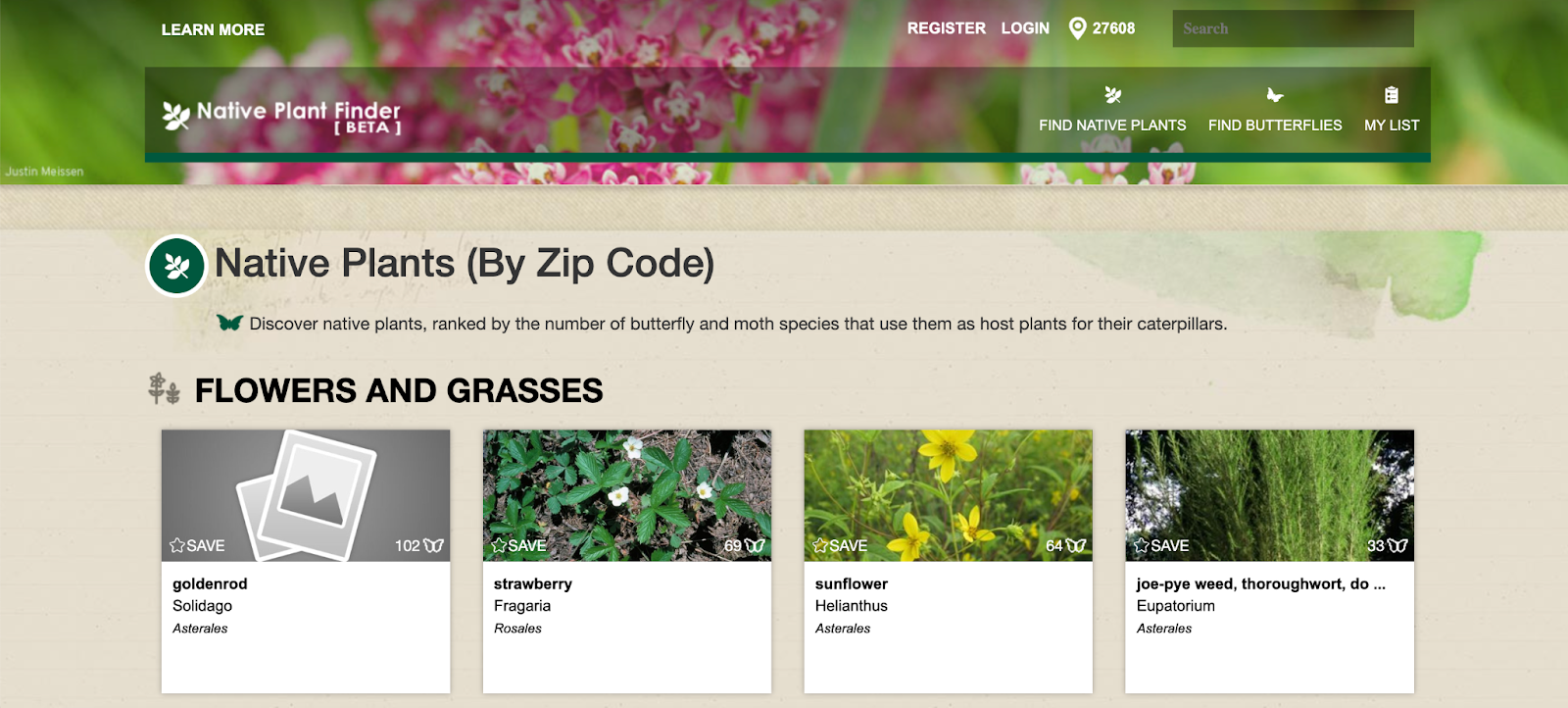
Screenshot from Native Plants, National Wildlife Federation, https://nativeplantfinder.nwf.org/Plants
Native plants are hardy and require less maintenance than non-native species, and their deep roots increase their ability to hold water. When selecting plants, it is important to consider height, color, and blooming times. Mixing up plant colors, heights, blooming times, and textures can give a rain garden an artistic dimension that creates visual interest. The addition of diverse grasses and sedges also helps strengthen the root systems of these plants, which creates a healthy and functioning rain garden.
Ellerbe Creek Watershed Association provides a seasonal rain garden maintenance guide to help you care for your rain garden with information on watering, weeding & mowing, plant maintenance, mulching, cleaning, fertilizing (you do not need to fertilize! The native plants adapt well to their environment.)
BENEFITS OF A RAIN GARDEN
Why have a rain garden?
Helps protect against flooding and drainage problems
Increases the amount of water that filters in the ground, which recharges aquifers
Removes standing water in your yard
Helps protect local streams and rivers from pollutants such as fertilizer, car fluids, salt, and pesticides
Improves water quality through the removal of pollutants
Creates habitats for birds, butterflies, bees, beneficial insects, and wildlife
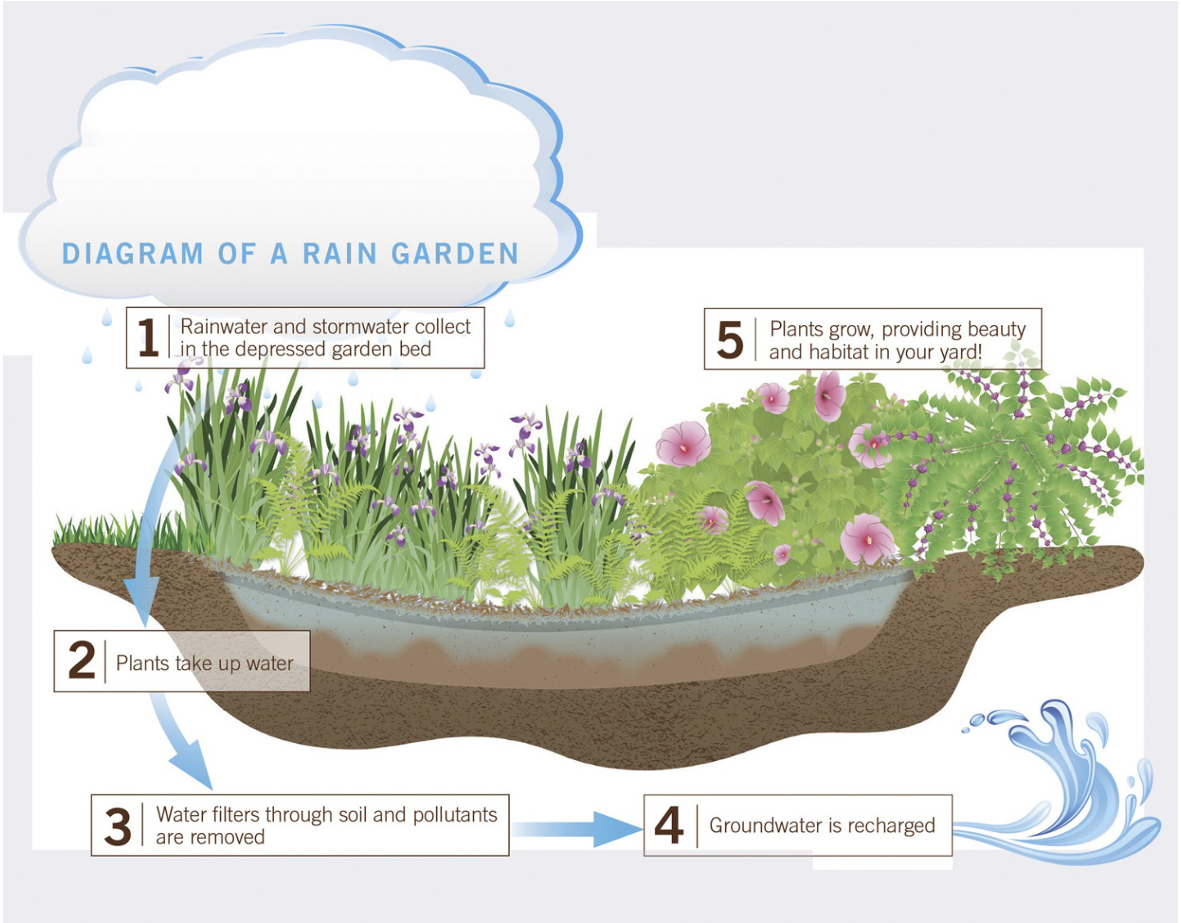
Diagram by Coastal Georgia Botanical Gardens, “Harnessing Nature’s Elegance: The Beauty and Benefits of Rain Gardens”, https://coastalbg.uga.edu/2023/07/harnessing-natures-elegance-the-beauty-and-benefits-of-rain-gardens/.
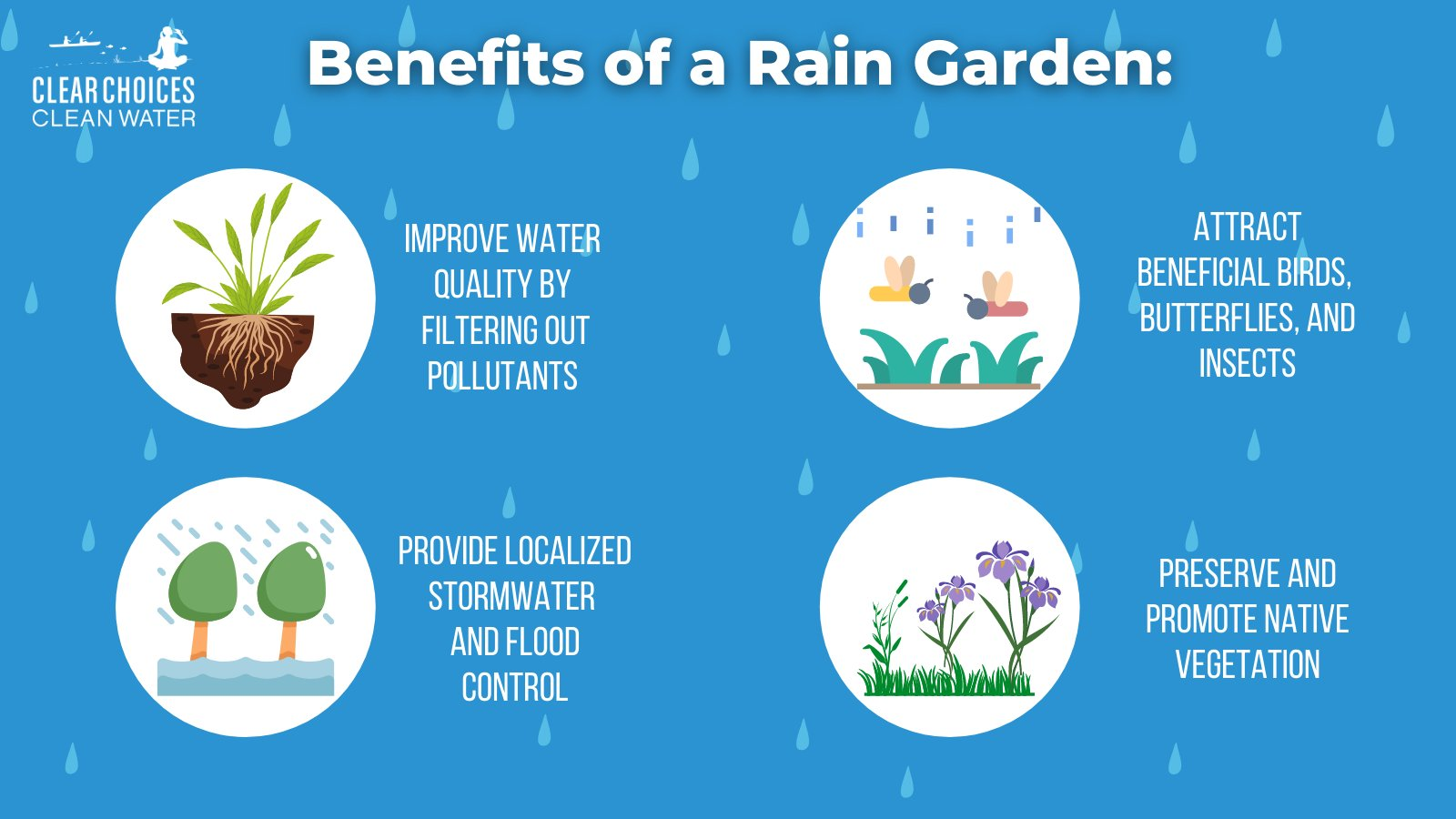
Diagram by Clear Choices Clean Water Indiana, “Benefits of a Rain Garden”, https://x.com/ClearChoices/status/1396835990799519746/photo/1 Diagram
There are many great reasons to have a rain garden. Create one, and enjoy the benefits!
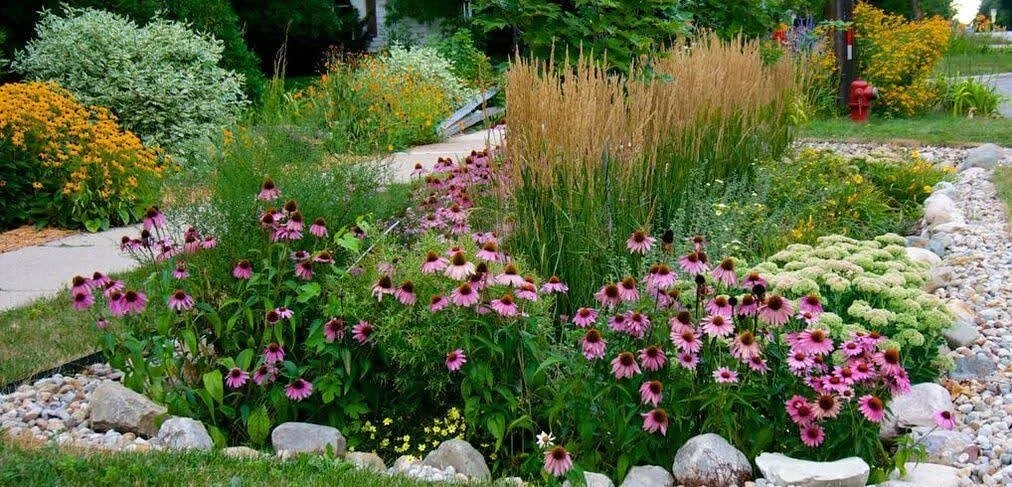
Rain garden designed and installed by Master Rain Gardener Linda Prieskorn. “What Is a Rain Garden? Cincinnati Master Rain Gardener Program,” https://www.cincyraingardener.org/what-is-a-rain-garden.html.
Resources
North Carolina Cooperative Extension, Chatham County Center, “Rain Gardens,” http://chatham.ces.ncsu.edu/rain-gardens/.
North Carolina Coastal Federation Low Impact Development: Rain Gardens,” http://www.nccoast.org/uploads/documents/factsheets/FS_raingardens.pdf/.
North Carolina Cooperative Extension, Brunswick County Center, “Rain Gardens,” http://brunswick.ces.ncsu.edu/natural-resources-2/rain-gardens/.
United States Environmental Protection Agency, “Soak Up the Rain: Rain Gardens,” http://www.epa.gov/soakuptherain/soak-rain-rain-gardens.
University of Wisconsin—Extension, “Rain Gardens: A Household Way to Improve Water Quality in Your Community, https://fyi.extension.wisc.edu/sewraingardens/files/2012/07/RG-Pub-8.5x11.pdf.
West Michigan Environmental Action Council, “Rain Gardens of West Michigan: Saving the Great Lakes One Garden at a Time,” https://www3.uwsp.edu/cnr-ap/UWEXLakes/Documents/ecology/shoreland/raingarden/create_a_rain_garden_michigan.pdf.