
Tree Identification Apps Help You Learn About Trees Around You
By MJ Vieweg and Anne Miller
Picture ID Apps

Identification apps use image recognition technology to search for and identify the subject of an image captured by your phone. For example, Google Lens, https://lens.google/howlensworks/, is a free app that is easy and quick to use but not specifically geared toward the natural environment. Google Lens can quickly identify a tree (or plant or insect) and provide you with lots of websites to search for more information.
Here are some apps that were developed to encourage and aid both novice and expert naturalists:

iNaturalist is both a free identification app and a social network for citizen-scientists. According to the website, https://www.inaturalist.org/, “iNaturalist is an online social network of people sharing biodiversity information to help each other learn about nature.”
By 2030, iNaturalist projects a global network of 100 million naturalists using the app to retrieve and share data uploaded by its users.
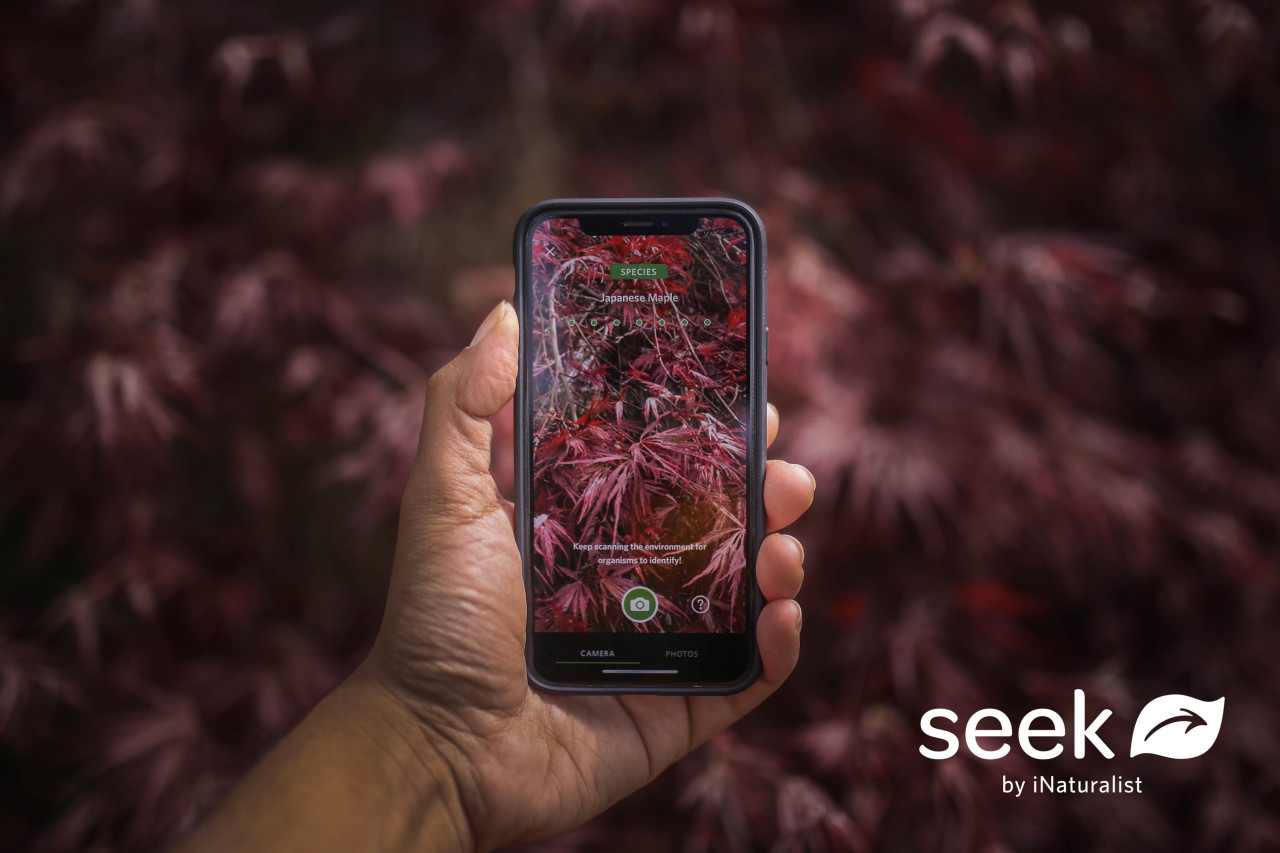
Seek (by iNaturalist), https://www.inaturalist.org/blog/23075-real-time-computer-vision-predictions-in-seek-by-inaturalist-version-2-0, is useful if you have a more casual interest in plants and just enjoy being able to identify the types of trees and plants in your neighborhood. The app is family and kid-friendly, no account is needed, and no information is shared online.
Picture This, https://www.picturethisai.com/, acts as an online plant encyclopedia; the app not only identifies plants and trees but also helps you care for them. It can tell you why your plant might be wilting, determine how much sunlight it gets, and recommend the right amount of light it needs to thrive. You can download the app for free, but you will be prompted to subscribe to or sign up for a free seven-day trial to PictureThis Pro, a premium membership that currently costs $42.89 for a year’s subscription. You can just click the x or cancel button to close that window and return to the free app. It can be a gardener’s best friend!

These apps are easy to use. If you have ever been curious about the types of trees and plants that you see every day in your backyard or local park, download one of these apps and have fun learning about them!
Digital Field Guides

Flora Quest: Carolinas and Georgia, https://ncbg.unc.edu/research/unc-herbarium/flora-apps/, is a digital botanical flora app that provides information on the plants of a particular geographical area. Developed by Alan Weakley, director of the UNC-Chapel Hill Herbarium at the North Carolina Botanical Garden, the contents are managed in a database that can be “customized for a large or small geographic area, with alternate identification methods, and with tens of thousands of diagnostic photographs” (Conservation Gardener, Spring/Summer 2024). This guide has a steeper learning curve than the picture ID apps and other digital field guides and is geared more toward citizen-scientists than casual users.
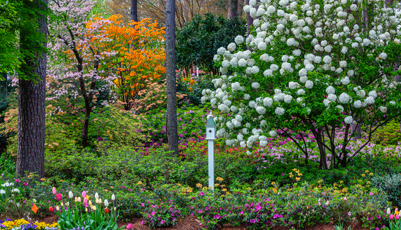
The North Carolina Extension Gardener Plant Toolbox is a user-friendly website that “contains detailed descriptions and photographs of 4,687 plants that grow in and around North Carolina.” You can search plants by their common or scientific names. The primary goal of the toolbox “is to help people select plants that will bring them joy, provide a valuable function in their landscape, and thrive where planted….” Access the website at https://plants.ces.ncsu.edu/.
If you have used these apps, please share your experience in the comments section of the blog. Do you have another app you would recommend? If so, please share what it is, how to access it and what you like about it in the comments section.